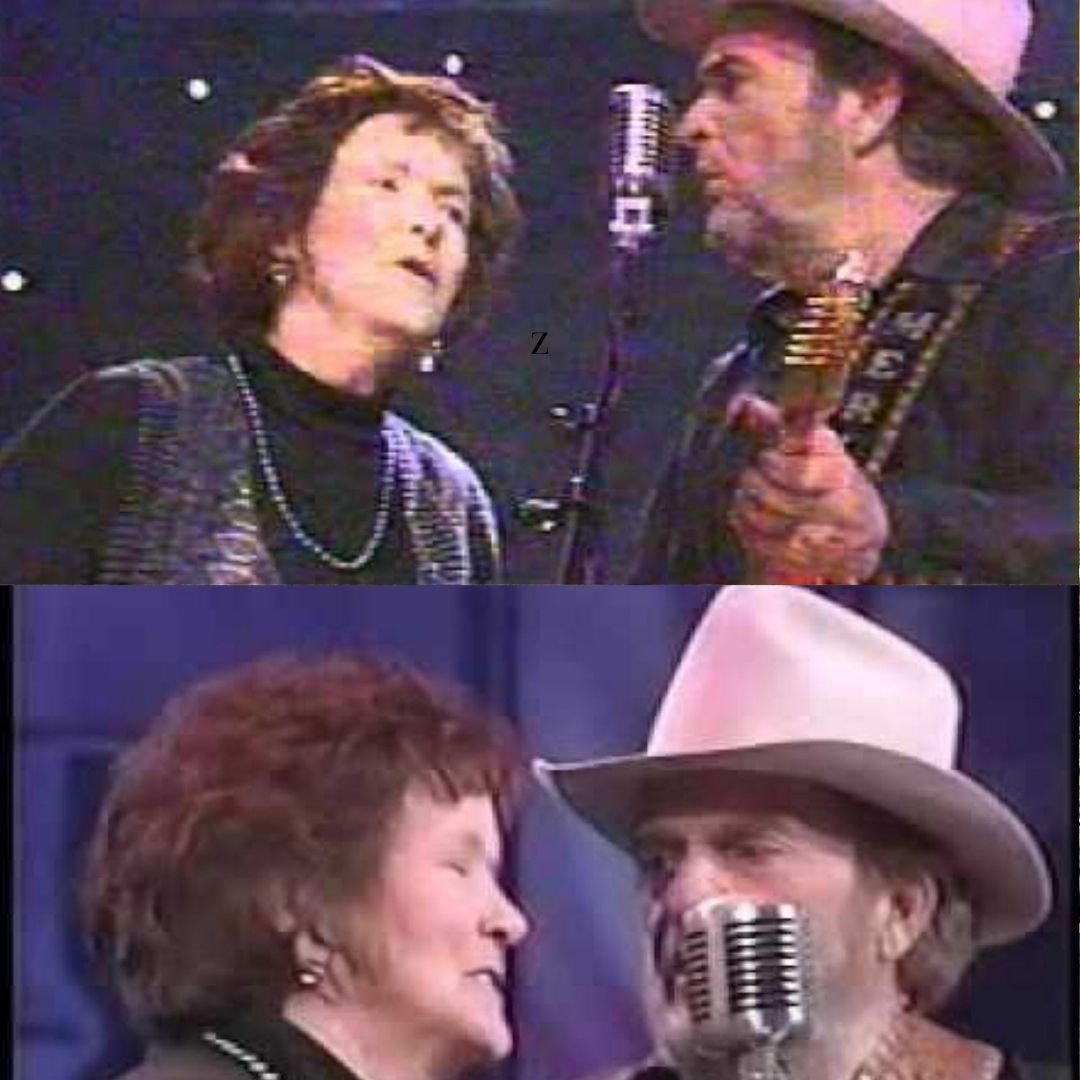
Few names embody the rugged authenticity of country music like Merle Haggard and Bonnie Owens. Both were gifted storytellers whose voices carried the dust, heartache, and honesty of everyday American life. Born in Oildale, California, on April 6, 1937, Haggard rose from troubled beginnings—losing his father young, serving time at San Quentin—to become one of country music’s most prolific figures, with 38 No. 1 singles and more than 70 albums to his credit. His trademark baritone and his blend of honky-tonk with the Bakersfield sound defined a generation.
Bonnie Owens, born October 1, 1929, in Blanchard, Oklahoma, carved her own path before ever meeting Haggard. A singer-songwriter with a clear, plaintive voice, she was already known for her work alongside her first husband, Buck Owens. After their divorce, Bonnie pursued her own career, recording heartfelt songs that often focused on themes of love, faith, and perseverance.
Together, Haggard and Owens recorded Slowly But Surely, a duet that spotlighted their natural chemistry—his weathered delivery against her supportive harmonies. It wasn’t just a song; it was a glimpse into the bond they shared on and off stage, a partnership that shaped much of Haggard’s early career.
Early Career
Bonnie Owens began performing in the 1950s, steadily building a reputation in the California honky-tonk circuit. She became a respected presence in Bakersfield, a city that would later give country music its raw, twangy, electric-driven style.
Haggard’s early years were far more turbulent. After stints in juvenile detention and a prison sentence, he discovered a sense of direction through music. His influences included Lefty Frizzell, Hank Williams, and Bob Wills, shaping his style into something both traditional and deeply personal. By the late 1950s, Haggard was performing in local bands, honing his craft on small stages.
When their paths crossed, Owens became both a personal partner and a professional anchor for Haggard. She encouraged his songwriting and often stood beside him as a harmony singer, blending her voice into his stories of loss, resilience, and redemption.
Rise as a Solo Artist
Haggard’s solo career began to take shape in the early 1960s after signing with Tally Records, releasing tracks like Sing a Sad Song. His talent for writing from personal experience set him apart. Bonnie, meanwhile, was releasing her own material, including Don’t Take Advantage of Me and gospel-inspired recordings.
What made their collaboration unique was Bonnie’s role not just as a duet partner, but as a steady influence during Haggard’s climb. In live shows, she was often part of his backing band, The Strangers, and her voice became an essential layer of his sound.
Breakthrough Hit
For Haggard, the breakthrough came in 1966 with I’m a Lonesome Fugitive, his first No. 1 hit. The song’s themes of escape and regret resonated deeply, partly because they mirrored his own past. This success opened the door for a remarkable run of hits including Mama Tried (1968), Okie from Muskogee (1969), and The Fightin’ Side of Me (1970).
While Slowly But Surely was never positioned as one of his chart-defining singles, it represents the quieter side of his artistry—intimate duets that revealed vulnerability. Owens’s harmony lent a sense of tenderness, softening Haggard’s gravel-edged vocals and creating a sound both balanced and human. Their duets were not about chasing chart positions, but about capturing the lived-in truth of love and endurance.
Awards and Recognition
Merle Haggard’s accolades are nearly unmatched in country history:
-
Country Music Hall of Fame inductee (1994)
-
Kennedy Center Honors (2010)
-
Multiple Grammys and Academy of Country Music Awards, including awards for Entertainer of the Year
-
Countless CMA trophies recognizing his songwriting and performance
Bonnie Owens, though quieter in the spotlight, earned respect as both a solo artist and harmony singer. She received Academy of Country Music Awards for Female Vocalist of the Year (1965 and 1966), cementing her role as an important voice in the Bakersfield sound era.
Legacy
Together, Merle Haggard and Bonnie Owens represented the resilience of country music’s West Coast scene. Their partnership—personal, professional, and musical—gave Haggard the grounding he needed to become a legend, while also ensuring Owens’s place as more than a supporting figure. Slowly But Surely stands as a testament to their bond: a song that may not have topped charts, but captured the essence of two voices moving forward, one step at a time.
Haggard’s legacy continues to ripple through modern country, Americana, and roots music. His songs remain staples, covered by artists across genres. Bonnie Owens, though often remembered in connection to Haggard and Buck Owens, left behind a body of work that speaks to her individuality and quiet strength.
In the end, their duet reminds us that country music has always been about more than fame or fortune—it’s about voices finding one another in the dark, telling stories that linger long after the lights fade.
Video
Lyrics
Slowly but surely I’m falling in love falling in love with you
Slowly but surely you’re winning my heart
And you’re winning my heart too
Slowly but surely I’m losing my heart
And I’m losing my heart to you
Slowly but surely my dreams will come true
If I spend my lifetime with you
You’re just what I wanted you’re just what I needed
You’re my every dream come true
My life’s growing stronger I can’t wait much longer
I’m falling in love with you
Slowly but surely I’m falling in love
Yes I’m falling in love falling in love with you