“Scroll down to the end of the article to listen to music.”
Introduction

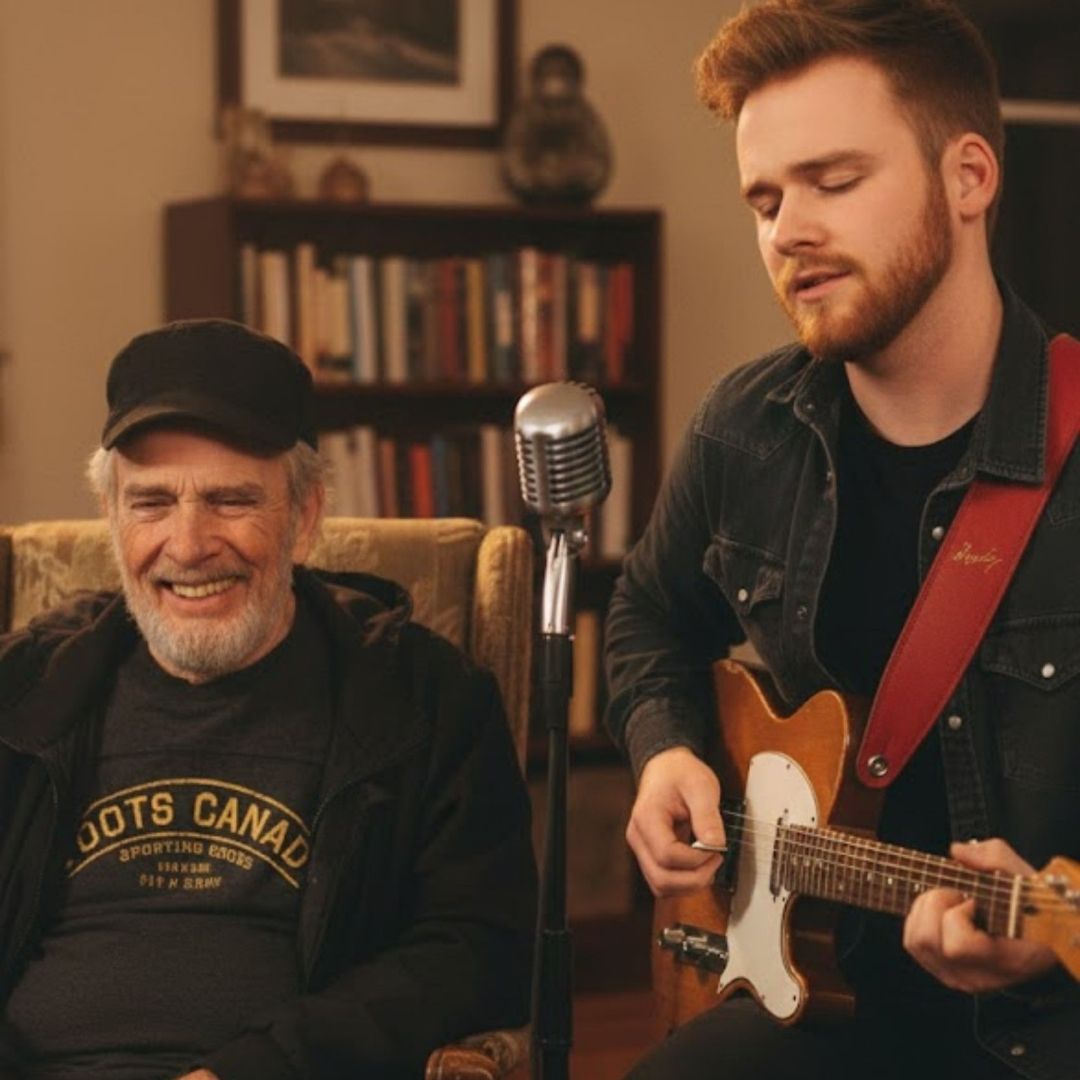
Some songs don’t simply pass through the air — they stay with you, echoing long after the final note fades. “If I Could Only Fly” is one of those rare, tender pieces of music that lingers like a breath against the soul. And when Ben Haggard sings it, the song transforms into something deeper than melody — it becomes a quiet, trembling moment suspended in time.

Written by the late Blaze Foley and embraced by Merle Haggard during the later years of his life, the song has long been understood as a confession whispered in the dark. It speaks of distance that can’t be crossed, of regret that cannot be undone, of the longing to reach someone you love even when life has placed oceans — visible or invisible — between you. For Merle, it was a kind of farewell. A gentle acknowledgment of the aches we carry and the apologies we wish we had said sooner.

But when Ben Haggard steps into the song, something remarkable happens.

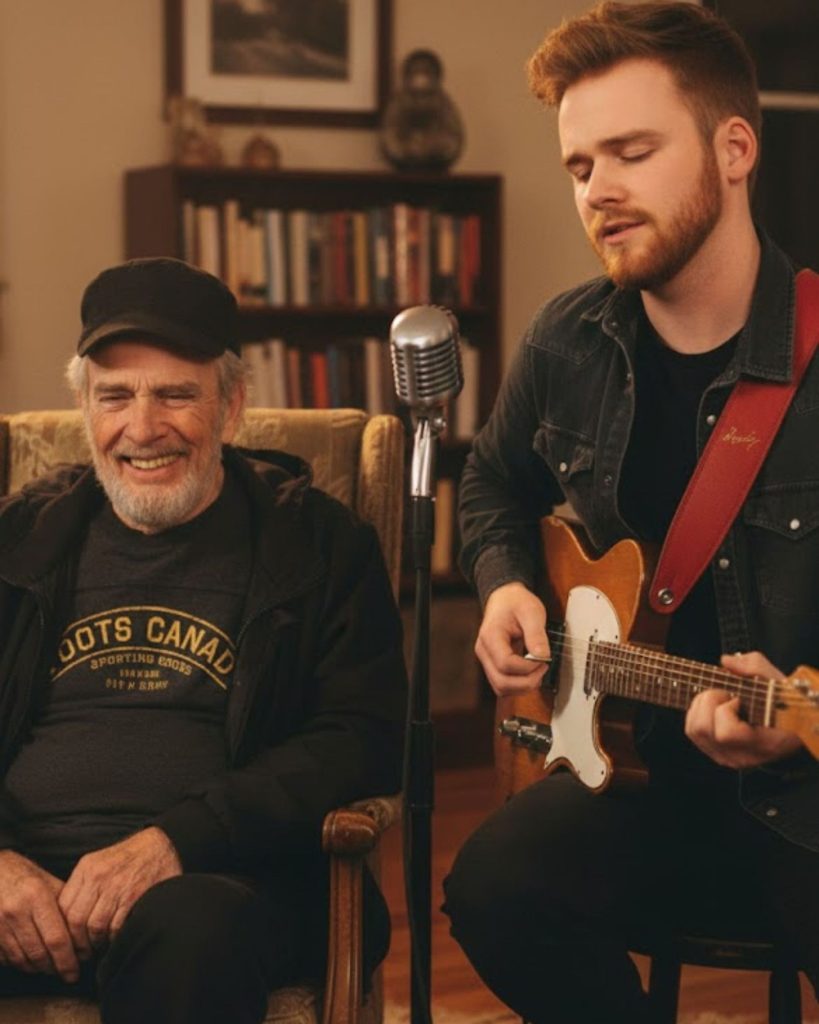
It no longer feels like a man singing another man’s truth. It becomes a dialogue — intimate, unforced, and deeply human. A son responding to the lingering voice of his father, not with imitation or theatrics, but with honesty. Ben doesn’t try to sound like Merle; he doesn’t need to. He lets the quiet speak. He allows the pauses to breathe. In those small spaces between the notes, you can feel both the weight and the warmth of a legacy he never asked for but carries with grace.

Ben’s rendition is not a performance — it’s a moment of remembrance. You hear the sorrow, but also the healing. You sense the grief, but also the gratitude. It’s the sound of love continuing its journey after loss, refusing to disappear simply because the person is gone. His voice carries a soft resilience, the kind born from living with memories that comfort as much as they hurt.

For anyone who has lost someone, or has wished for one more conversation, one more chance, one more moment — this song reaches out quietly. It doesn’t demand attention or try to overwhelm. Instead, it settles beside you like a familiar memory, gentle and patient, willing to stay for as long as you need it.

“If I could only fly / I’d bid this place goodbye…”
In Ben’s hands, these words are no longer just a longing — they become a promise. A promise that love, even in its quietest form, continues to move, continues to rise, continues to fly where our feet cannot.
 
Video

Lyrics

I almost felt you touching me just now
I wish I knew which way to turn and go
I feel so good, and then then I feel so bad
I wonder what I ought to do
If I could only fly, if I could only fly
I’d bid this place goodbye, to come and be with you
But I can hardly stand, and I got no where to run
Another sinking sun, and one more lonely night
The wind keeps blowing somewhere everyday
Tell me things get better, somewhere, up the way
Just dismal thiking on a dismal day
Sad songs for us to bare
If I could only fly
If we could only fly
There’d be no more lonely nights
You know sometimes I write happy songs
Then some little thing goes wrong
I wish they all could make you smile
Coming home soon and I wanna stay
Maybe we can somehow get away
I wish you could come with me when I go again
If I could only fly, if I could only fly
I’d bid this place goodbye, to come and be with you
But I can hardly stand, and I got no where to run
Another sinking sun, and one more lonely night

Related Post

HIS WIFE DIED THE DAY BEFORE THANKSGIVING. THREE WEEKS LATER, THE KING OF HONKY-TONK WAS FOUND DEAD IN THE SAME FLORIDA HOME. Gary Stewart was never built like a clean Nashville star. He came out of Kentucky poverty, grew up in Florida, and sang country music like the bottle was already open before the band counted off. In the mid-1970s, people called him the King of Honky-Tonk. “She’s Actin’ Single (I’m Drinkin’ Doubles)” went to No. 1 in 1975. But the road under him was never steady. There was the drinking. The drugs. The old back injury. The disappearing years when country music moved on and Gary Stewart kept slipping further from the bright part of the business. Mary Lou was the person who kept showing up beside him. They had been married for more than 40 years. She had seen the bars, the money, the chaos, the fall, the comeback attempts, and the quiet Florida days after the big moment had passed. Then November 26, 2003 came. Mary Lou died of pneumonia, the day before Thanksgiving. Gary canceled his shows. Friends said he was devastated. On December 16, Bill Hardman, his daughter’s boyfriend and Gary’s close friend, went to check on him at his Fort Pierce home. Gary Stewart was dead from a self-inflicted gunshot wound. Fans remember the voice bending around heartbreak like it had nowhere else to go. But the last chapter was not on a stage. It was a widower in Florida, three weeks after losing the woman who had survived the whole honky-tonk storm with him.

You Missed

HIS WIFE DIED THE DAY BEFORE THANKSGIVING. THREE WEEKS LATER, THE KING OF HONKY-TONK WAS FOUND DEAD IN THE SAME FLORIDA HOME. Gary Stewart was never built like a clean Nashville star. He came out of Kentucky poverty, grew up in Florida, and sang country music like the bottle was already open before the band counted off. In the mid-1970s, people called him the King of Honky-Tonk. “She’s Actin’ Single (I’m Drinkin’ Doubles)” went to No. 1 in 1975. But the road under him was never steady. There was the drinking. The drugs. The old back injury. The disappearing years when country music moved on and Gary Stewart kept slipping further from the bright part of the business. Mary Lou was the person who kept showing up beside him. They had been married for more than 40 years. She had seen the bars, the money, the chaos, the fall, the comeback attempts, and the quiet Florida days after the big moment had passed. Then November 26, 2003 came. Mary Lou died of pneumonia, the day before Thanksgiving. Gary canceled his shows. Friends said he was devastated. On December 16, Bill Hardman, his daughter’s boyfriend and Gary’s close friend, went to check on him at his Fort Pierce home. Gary Stewart was dead from a self-inflicted gunshot wound. Fans remember the voice bending around heartbreak like it had nowhere else to go. But the last chapter was not on a stage. It was a widower in Florida, three weeks after losing the woman who had survived the whole honky-tonk storm with him.