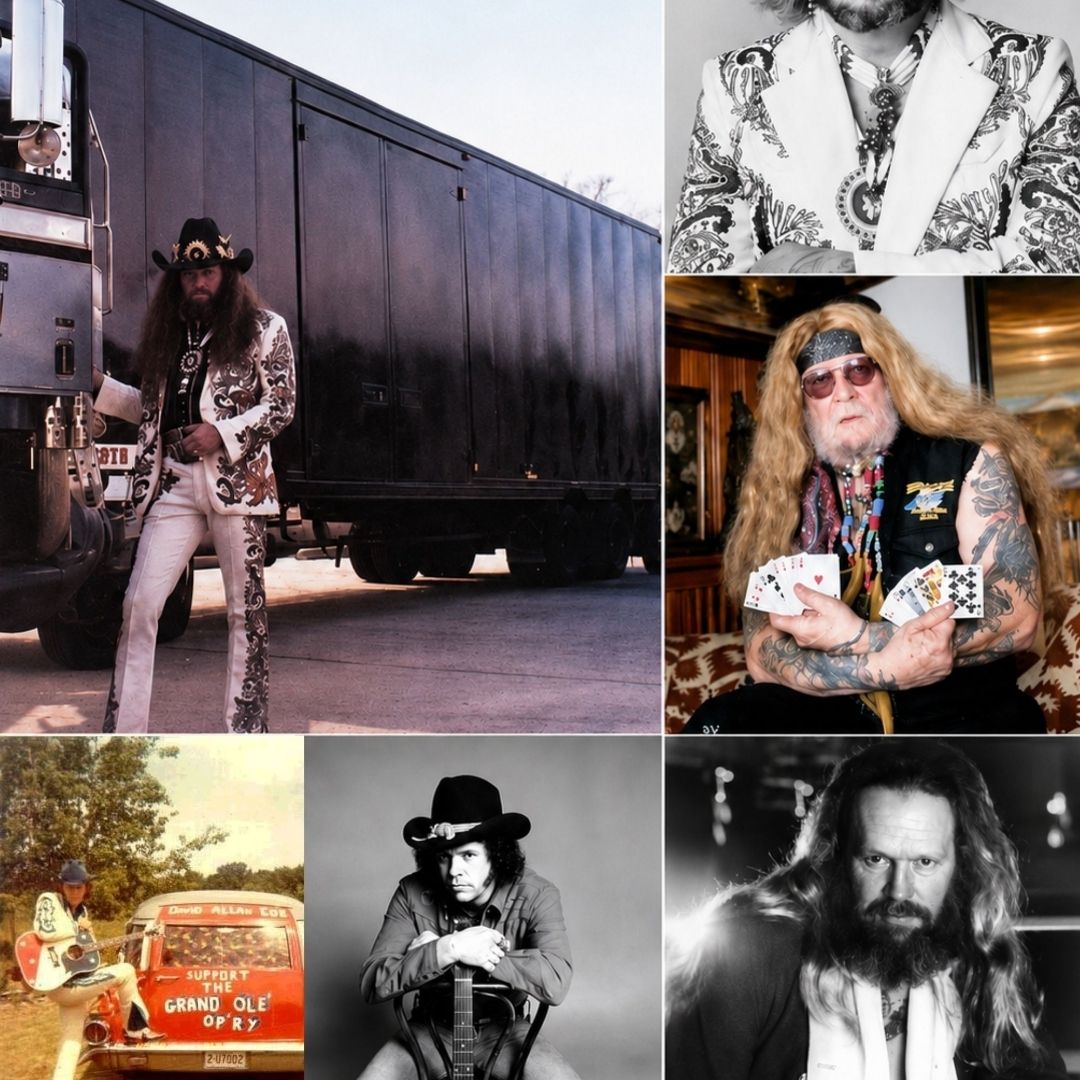
DAVID ALLAN COE DID NOT WRITE HIS BIGGEST HIT — HE JUST TOLD STEVE GOODMAN IT WAS NOT COUNTRY ENOUGH.
Some songs become famous because the writer gets everything right.
This one became famous because David Allan Coe told the writer he had missed a few things.
By 1975, Coe had already made Nashville nervous.
Prison stories.
Long hair.
Rhinestone suits.
Biker energy.
A man who walked into country music like he had come from somewhere Music Row did not want to explain.
He could write songs Tanya Tucker took to No. 1.
He could give Johnny Paycheck the words to sound like a working man ready to burn the whole place down.
But Coe still needed a hit with his own name on it.
Then Steve Goodman Brought Him A Song
The song was called “You Never Even Called Me by My Name.”
Steve Goodman had written it with John Prine, though Prine did not want his name on the credit.
It sounded like a country song.
But it was also laughing at country songs.
Lonely men.
Whiskey.
Rain.
Old heartbreak lines.
Famous names.
The desperate need to sound sad enough for a jukebox to believe you.
Goodman thought he had written the perfect country-and-western song.
Coe disagreed.
Coe Said It Was Missing The Essentials
On the spoken introduction to the record, Coe told the story his own way.
He said he wrote Goodman back and explained that no song could call itself the perfect country song without a few things in it.
Mama.
Trains.
Trucks.
Prison.
And getting drunk.
That list was not really a songwriting rule.
It was a joke about the mythology country music had built around itself.
But Goodman took the challenge seriously enough to make it better.
The Last Verse Became The Whole Punchline
Goodman sent back one more verse.
It had everything.
A drunk son.
A mother getting out of prison.
A pickup truck.
A train.
A rainstorm.
Every country-song cliché piled into one disaster.
It was so exaggerated that it became brilliant.
Not because it was realistic.
Because it knew exactly how country music had taught listeners to recognize pain, pride, and bad luck before the first chorus was over.
The song was not mocking country from outside.
It was laughing from inside the bar.
Coe Knew How To Make The Joke Hurt
David Allan Coe did not write the song.
But he knew how to own it.
When he recorded it for Once Upon a Rhyme, he did not sing it like a novelty act chasing a laugh. He sang it with enough wounded pride that the humor carried a bruise underneath it.
He named Waylon Jennings.
Charley Pride.
Merle Haggard.
Faron Young.
Then he turned the song into a barroom mirror held up to Nashville.
Everybody in the room could laugh.
But everybody knew they were looking at themselves.
The Hit Finally Came
Released in 1975, “You Never Even Called Me by My Name” became David Allan Coe’s first Top 10 country hit.
That is the strange beauty of it.
The song that gave Coe his biggest commercial breakthrough was not a prison song, not a biker story, not one of his darker outlaw confessions.
It was a song written by Steve Goodman, sharpened by John Prine, and pushed into its final shape because Coe said it was not country enough.
Sometimes pride makes a man reject a song.
Sometimes it gives the song its last perfect verse.
What “You Never Even Called Me By My Name” Really Leaves Behind
The deepest part of this story is not only that David Allan Coe had a hit with someone else’s song.
It is that he understood the joke was really about all of them.
A songwriter from Chicago.
A hidden John Prine credit.
A long-haired outlaw from Ohio.
Mama, trains, trucks, prison, and getting drunk.
A country song laughing at country songs.
And a performance that made the satire sound personal enough to hurt.
David Allan Coe did not have to write “You Never Even Called Me by My Name” to make it his.
He only had to hear that the joke was about the whole country world — and sing it like he had already lived every ridiculous, wounded line.
Video