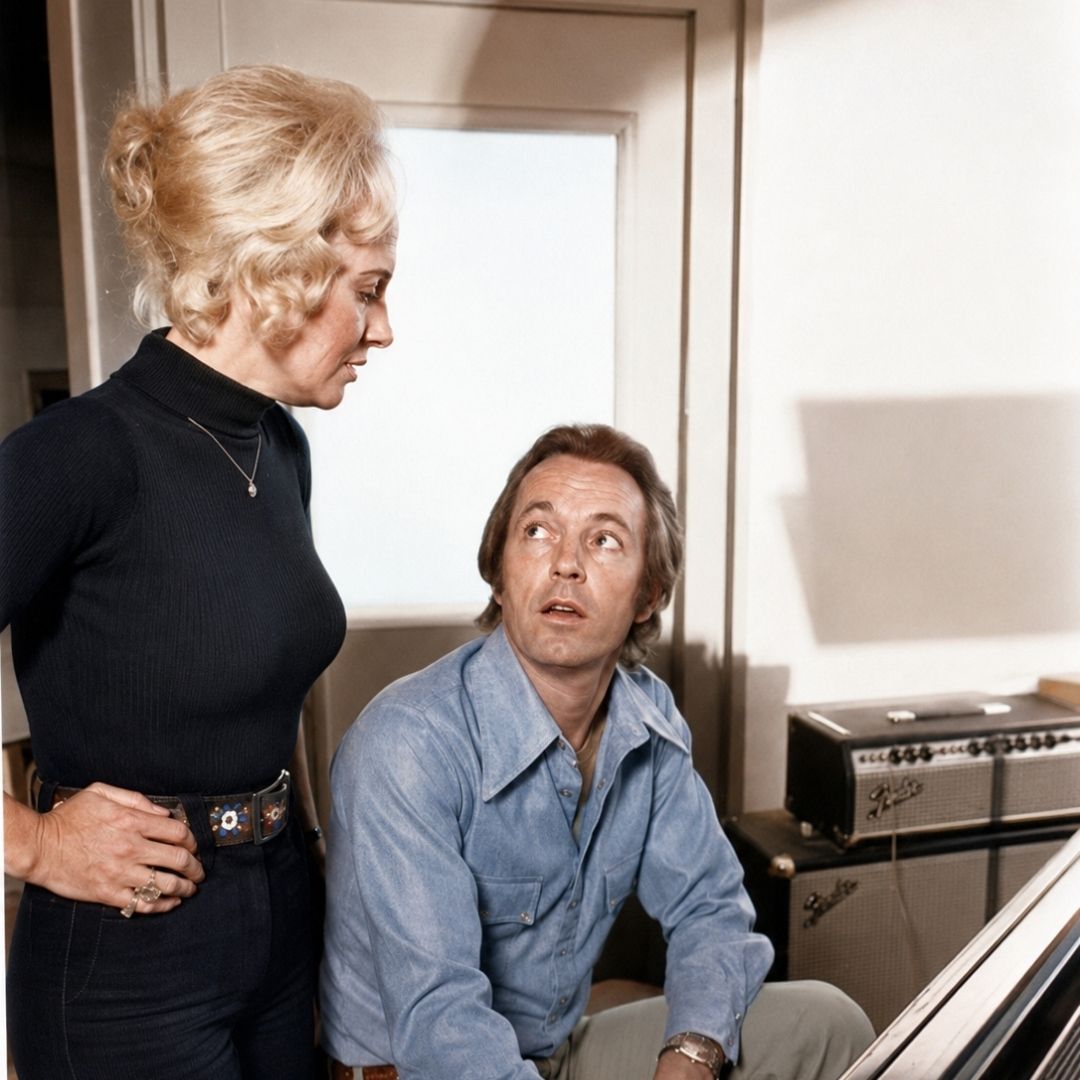
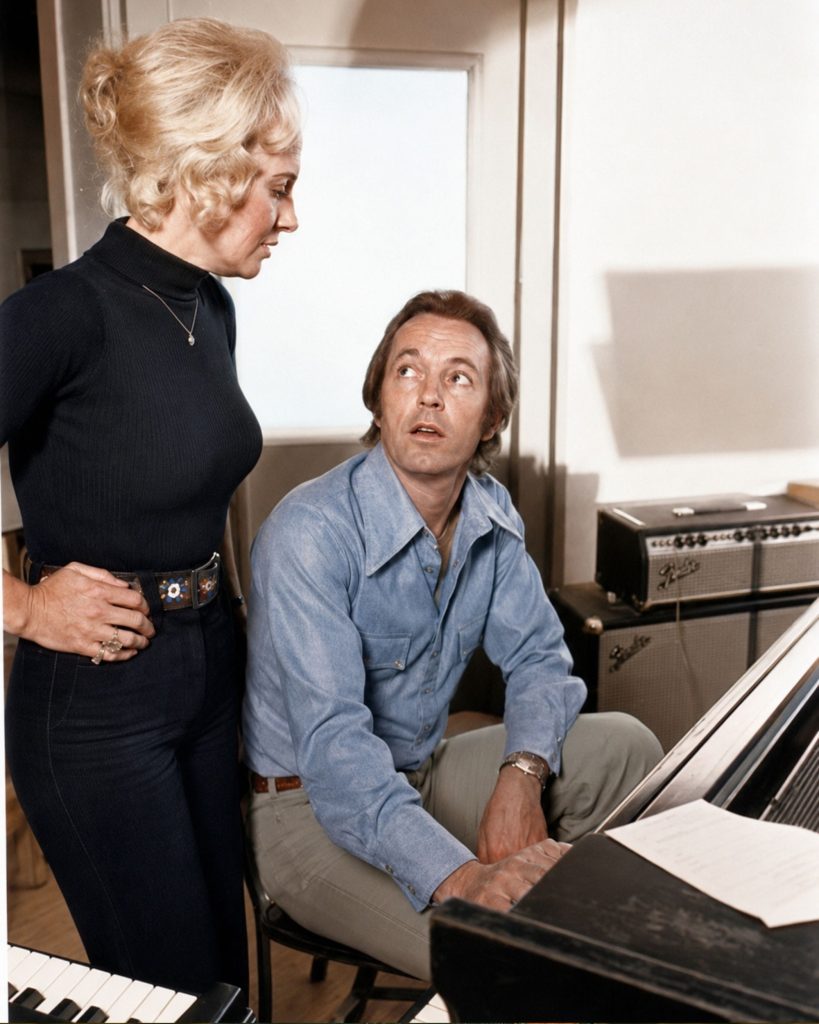
SHE HAD THREE LITTLE GIRLS, A BEAUTY OPERATOR’S LICENSE, AND NO REASON TO BELIEVE NASHVILLE WOULD WAIT FOR HER — THEN TAMMY WYNette ASKED TO SEE BILLY SHERRILL.
Before she was Tammy Wynette, she was Virginia Pugh from Itawamba County, Mississippi.
She had picked cotton as a child.
She had married young.
She had worked as a waitress, in a shoe factory, and behind a beauty shop chair because songs alone did not keep three little girls fed.
By the time she left her first husband, she was not carrying only a dream toward Nashville.
She was carrying daughters, bills, and the kind of fear that does not fit inside a guitar case.
She Sang Before Sunrise, Then Went To Work
For a while in Alabama, Tammy lived two lives every day.
She got up before daylight to sing on the local Country Boy Eddie television show.
Then she went to work doing hair.
Sing in the morning.
Set hair during the day.
Go home to three children at night.
And somewhere inside all of that, keep believing there was still another door.
That kind of faith is different when rent is due.
Nashville Did Not Open The Door
In 1966, she packed up and moved to Nashville.
The city did not greet her with a contract.
She drove around Music Row with her children, asked questions, knocked on doors, and heard every version of no.
Nashville was full of women who wanted to sing country music.
Most of them had talent.
Very few had a producer willing to stop and listen long enough to hear a life inside the voice.
But Tammy did not have the luxury of fading away quietly.
Then She Found Billy Sherrill
Eventually, Tammy got in front of Billy Sherrill at Epic Records.
Sherrill was becoming one of the great architects of the Nashville Sound — a producer who could build a record out of strings, steel guitar, silence, and a singer’s broken timing.
He heard something in Tammy that was not polished.
It was lived-in.
She could sing about a motel room, an empty house, a cheating husband, or a child caught in the middle — and make it sound like she had just walked out of the room herself.
He signed her.
The Songs Started Coming
Her first Epic single, “Apartment No. 9,” opened the door.
Then came “Your Good Girl’s Gonna Go Bad.”
“I Don’t Wanna Play House.”
“D-I-V-O-R-C-E.”
The woman who had arrived in Nashville with three little girls and a cosmetology license became the voice behind some of country music’s most unforgettable wounds.
She did not sing heartbreak as decoration.
She sang it like a bill that had already come due.
She Kept The License
Even after the No. 1 hits.
Even after the gold records.
Even after country music began calling her the First Lady of Country Music.
Tammy Wynette kept her cosmetology license renewed for the rest of her life.
That small detail says something important.
The woman who became a legend never forgot the chair, the comb, the day job, or the years when stardom was only something she had to fit between raising children and making a living.
What Tammy Wynette Really Leaves Behind
The deepest part of this story is not only that Tammy Wynette became one of country music’s greatest voices.
It is what she had to carry before anyone called her great.
A Mississippi girl who picked cotton.
Three little daughters.
A waitress uniform.
A shoe factory shift.
A beauty shop chair.
Early-morning television.
Music Row doors closing.
And one producer who heard a whole life in her voice.
Tammy Wynette did not arrive in Nashville waiting to be discovered.
She arrived because she had children to feed — and no intention of letting the dream die quietly.
Video