He Learned To Carry A Crowd Before He Was Old Enough To Carry Himself
There was a time when George Jones was not George Jones yet.
No legend. No myth. No long shadow stretching across country music.
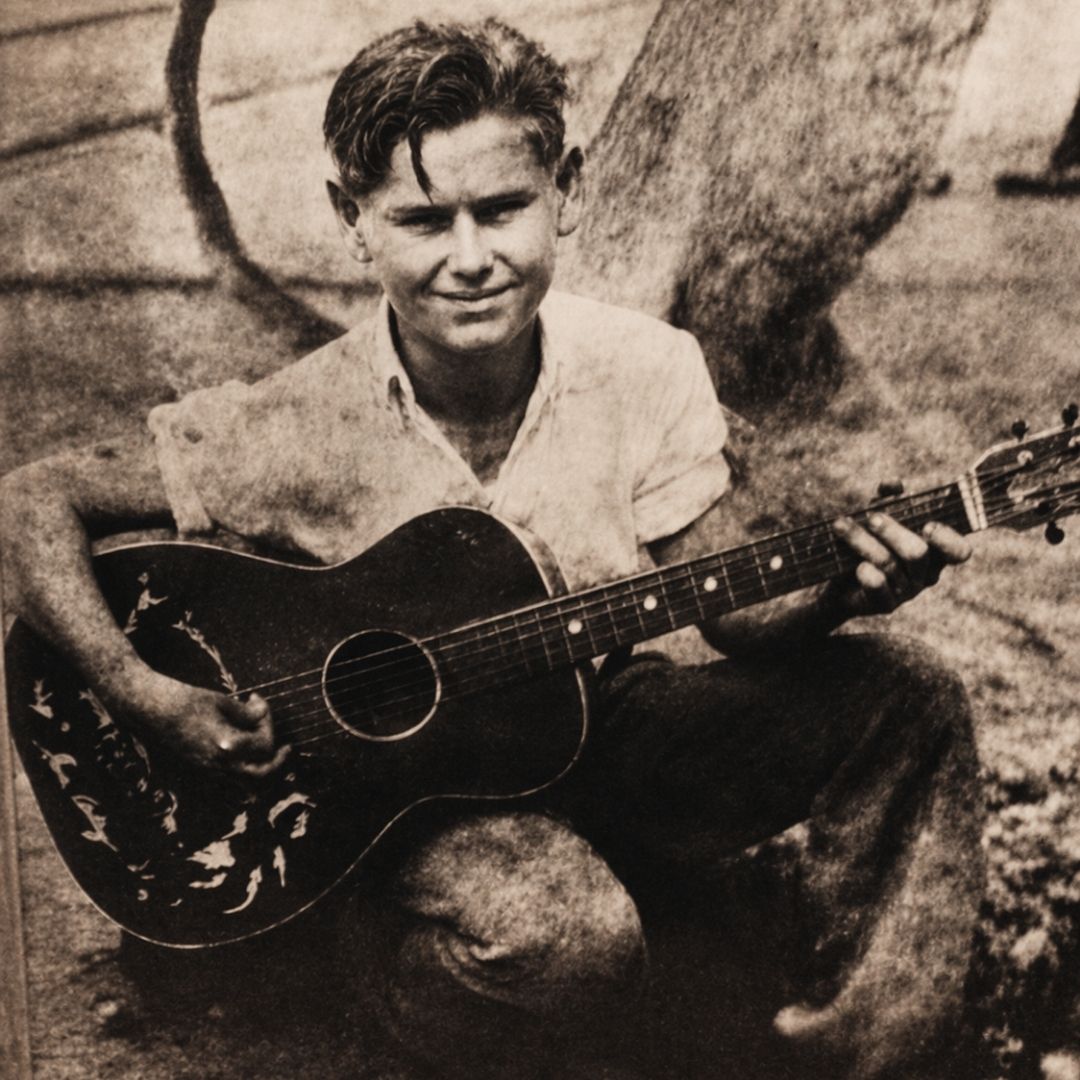
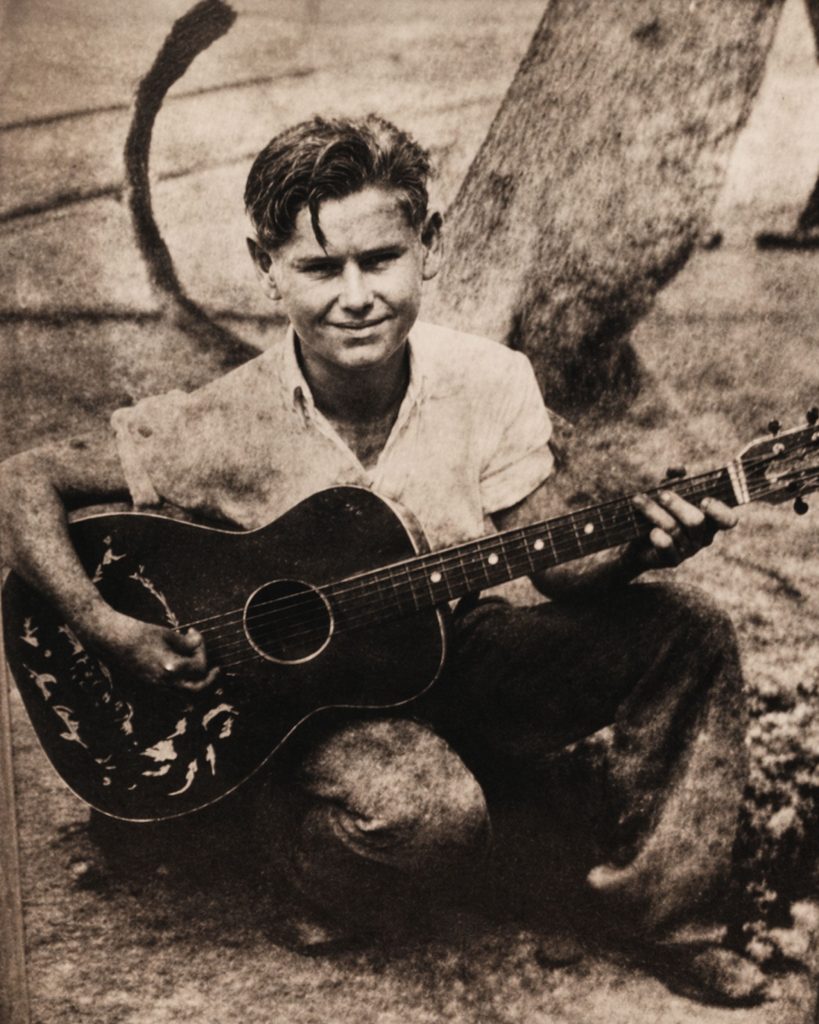
Just a skinny East Texas boy in Beaumont, growing up in a house where peace did not always stay long. The family had moved into public housing. Money was thin. His father drank. Home could feel unstable enough that a child learned early how to read a room, how to stay alert, how to disappear when necessary.
When the air inside the house got too heavy, George found his own way out.
He took the guitar outside.
The Street Corner Came Before The Stage
Before country music ever put lights on him, Beaumont had already given him an audience.
He sang on street corners for tips, not because it sounded romantic, but because it was practical. A boy with a cheap guitar could turn a voice into coins. Maybe not many. But enough to matter. Enough to make music feel useful, not just beautiful.
That detail changes the whole shape of the story.
He did not first discover singing in some protected dream space, where talent could grow slowly and safely. He learned it in public. With people passing by. With noise around him. With the possibility that nobody would stop at all.
That kind of beginning teaches a different lesson than formal training ever could.
It teaches you to reach people fast.
To hold them.
To make them feel something before they move on.
He Was Not Chasing Art Yet — He Was Making Room To Breathe
A lot of great singers begin with ambition.
George Jones began with pressure.
The singing was not just performance. It was relief. A child stepping out of a difficult house and finding one place where his voice could do something the rest of his life could not. It could create a little order. A little control. A little mercy.
That matters because you can hear it later.
Even when he became famous, George never sounded like a man singing from comfort. There was always strain in the beauty. Always ache inside the control. The voice seemed to know something before the song even said it.
That kind of sound usually starts long before success.
Usually in places a child never should have had to understand so early.
Church Taught Him The Other Half Of The Voice
The street gave him toughness.
Church gave him lift.
George sang gospel when he was young, and that stayed with him. It taught him that a voice did not only have to report pain. It could also reach above it. It could bend grief toward something holier, or at least something more bearable.
That combination became the center of what made him different.
He could sound wounded without sounding weak.
He could sound broken without sounding empty.
He could sound like a man falling apart and still somehow keep dignity inside the line.
A lot of singers can deliver sadness.
George Jones could make sadness sound like testimony.
The Boy In Beaumont Was Already Building The Man People Would Later Call Real
People often talk about “real country” as if it were mostly about accent, instrumentation, or biography.
With George, it went deeper than that.
The realism in his singing came from the fact that he had already lived inside tension before he ever stepped into the industry. Fear and faith. Poverty and pride. Noise at home and silence on the street between songs. He was not inventing emotional weight later for the sake of records. He had been carrying it since childhood.
So when the world finally heard him, it was not hearing a polished creation.
It was hearing years of survival sharpened into tone.
That is why even his simplest lines could feel dangerous. He did not sing like a man decorating emotion. He sang like someone who had already met it young.
Even The Tips Meant More Than Money
There is another layer in those street-corner years that makes the story hit harder.
The tips mattered, yes. But so did the response itself.
For a boy growing up in instability, the fact that strangers would stop and listen had its own power. It meant the voice could change a room. It could interrupt indifference. It could draw people near instead of pushing them away.
That may have been one of the earliest places George learned the strange promise music makes: that pain, if sung well enough, can become connection.
Not cure.
Not escape.
Connection.
A child may not have had language for that yet.
But he could feel it.
Before The Fame, He Was Already Learning What A Song Could Hold
By the time honky-tonks, records, and headlines entered the picture, George Jones had already done the deeper training.
He had learned how to sing when life was unstable.
How to keep a note steady when the world around him did not feel steady.
How to let sorrow into the sound without letting it swallow the whole thing.
That is why his greatest performances never feel merely skillful.
They feel inhabited.
Something inside them had been lived before it was recorded.
The Voice People Later Called Great Was First A Child’s Way Of Enduring
When people look back at George Jones, they often begin with the masterpieces, the wreckage, the reputation, the legend.
But the core of it may sit much earlier than all of that.
A boy in Beaumont.
A cheap guitar.
A house he needed to step away from.
A street corner that asked him to turn feeling into sound.
From there, the whole story starts to make more sense.
He did not become believable after fame.
He arrived believable.
Because long before country music knew his name, George Jones had already learned the hardest part of singing: how to tell the truth with a voice when the rest of life is still too heavy to explain.
Video