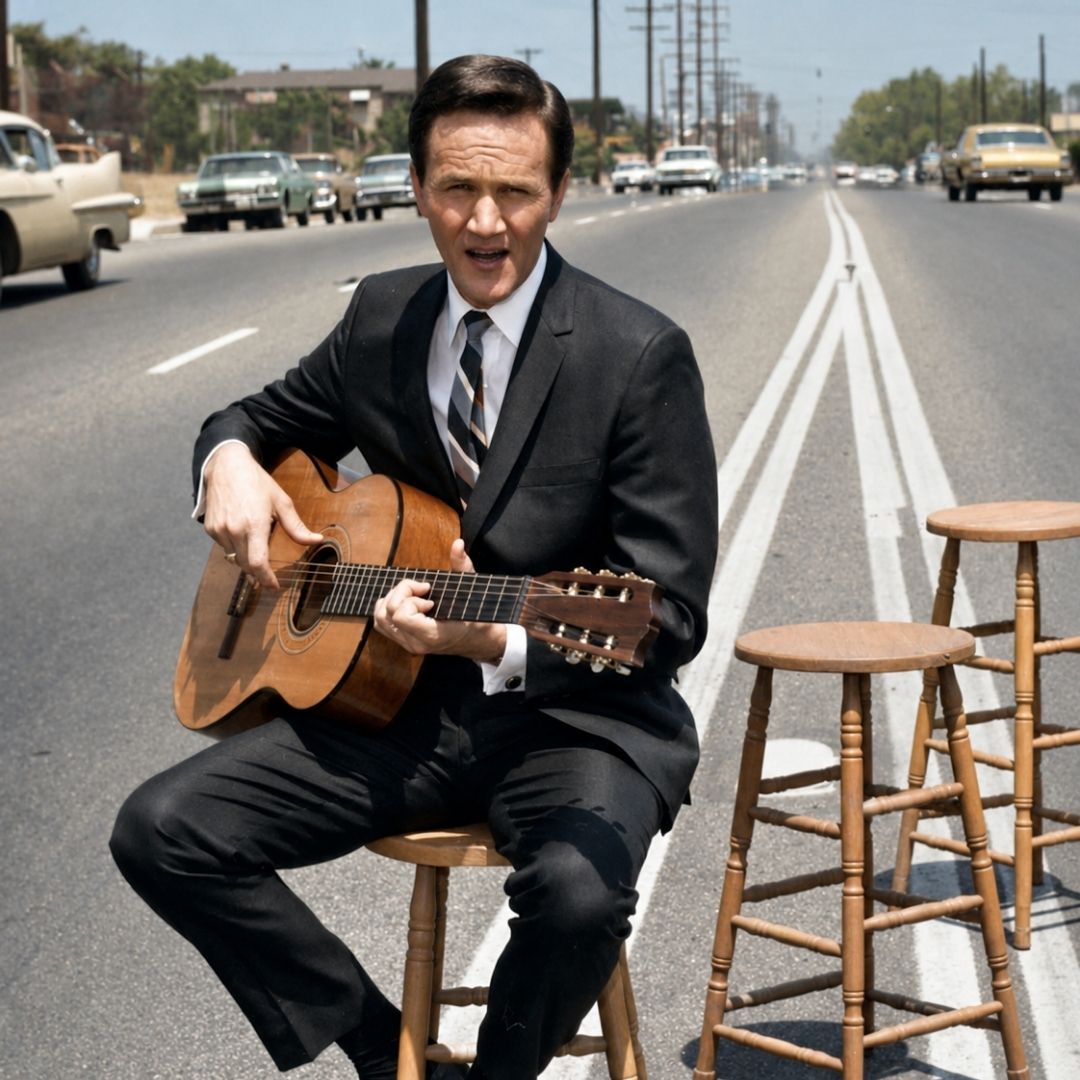
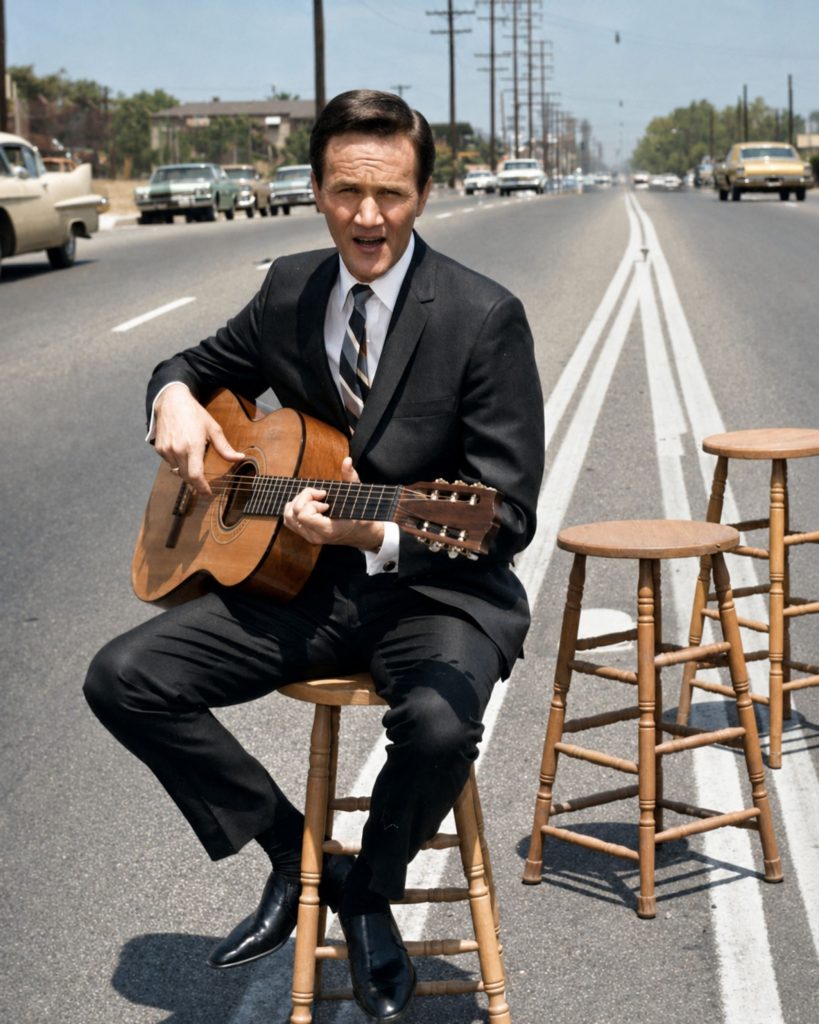
ROGER MILLER SAW “TRAILERS FOR SALE OR RENT” ON A SIGN — THEN TURNED A BROKE DRIFTER INTO THE “KING OF THE ROAD.”
Some country songs begin with heartbreak.
This one began with a sign.
Roger Miller saw the words “trailers for sale or rent,” and most people would have kept driving. To him, that plain little line already had a man living inside it.
A man with no real address.
No comfort to brag about.
No future anyone would envy.
But somehow, in Roger’s hands, he became royalty.
Roger Knew Empty Pockets
He did not come from a clean Nashville story.
Born in Oklahoma, raised poor, and shaped by loss early, Miller understood how far a man could stretch a dollar before pride had to start doing the rest.
Before the big hits, he had been through the Army, odd jobs, songwriting rooms, and years of trying to make his strange, brilliant mind fit inside a business that liked easier explanations.
Roger Miller was never easy to file.
That was the gift.
“Dang Me” Opened The Door
In 1964, “Dang Me” finally made Nashville look straight at him.
The song was funny, fast, and loose, but it had a bruise under the grin. That was Roger’s special trick. He could make people laugh before they realized the joke had a lonely man hiding in it.
After that, he was no longer just a writer with odd ideas.
He was the odd idea Nashville suddenly needed.
Then came the line on the sign.
The Drifter Became A King
“King of the Road” built its whole world out of almost nothing.
No phone.
No pool.
No pets.
No cigarettes.
A man counting rooms, sweeping floors, riding boxcars, and acting like he owned the highway because there was so little else left to own.
That was the genius of it.
Roger did not make poverty sound pitiful.
He made it walk with a crooked little crown.
The Song Smiled Without Lying
That is why the record lasted.
“King of the Road” sounds light at first. Easy. Clever. Almost playful.
But underneath it is a man surviving on scraps, distance, charm, and the ability to pretend freedom feels better than having a place to stay.
The song does not ask the listener to pity him.
It lets him keep his dignity.
Even if that dignity is held together by borrowed rooms and a broom.
Then The Whole World Sang Along
In 1965, “King of the Road” traveled far beyond country.
It reached No. 1 on the country chart, crossed high into pop, and helped Roger Miller dominate the Grammys.
A song about a man with almost nothing became one of the biggest records of the decade.
That was the beautiful contradiction.
The drifter in the song had no kingdom.
Roger Miller gave him one anyway.
What “King Of The Road” Really Leaves Behind
The deepest part of this story is not only that Roger Miller turned a roadside phrase into a hit.
It is that he heard dignity where most people would have heard failure.
A sign outside a trailer.
A broke man moving from place to place.
A joke with loneliness underneath it.
A crown made from empty pockets.
And somewhere inside “King of the Road” was the strange country truth Roger Miller understood perfectly:
Sometimes a man owns nothing.
So he starts singing like the whole road belongs to him.
Video